

Essential Reminders for Swim Meets
Before Meet Day:
- You will need to "declare" your swimmer prior to the deadline for each meet. Your swimmer will NOT be able to participate in the meet if they were not declared by the deadline.
- Parent Volunteers need to sign-up for jobs prior to the Swim Meet.
Swimmers:
- Swimmers shall check-in with the Head Coach as soon as they arrive at the pool on Meet Day.
- Swimmers that are 10 and under shall check-in with the appropriate bull pen volunteer as soon as possible.
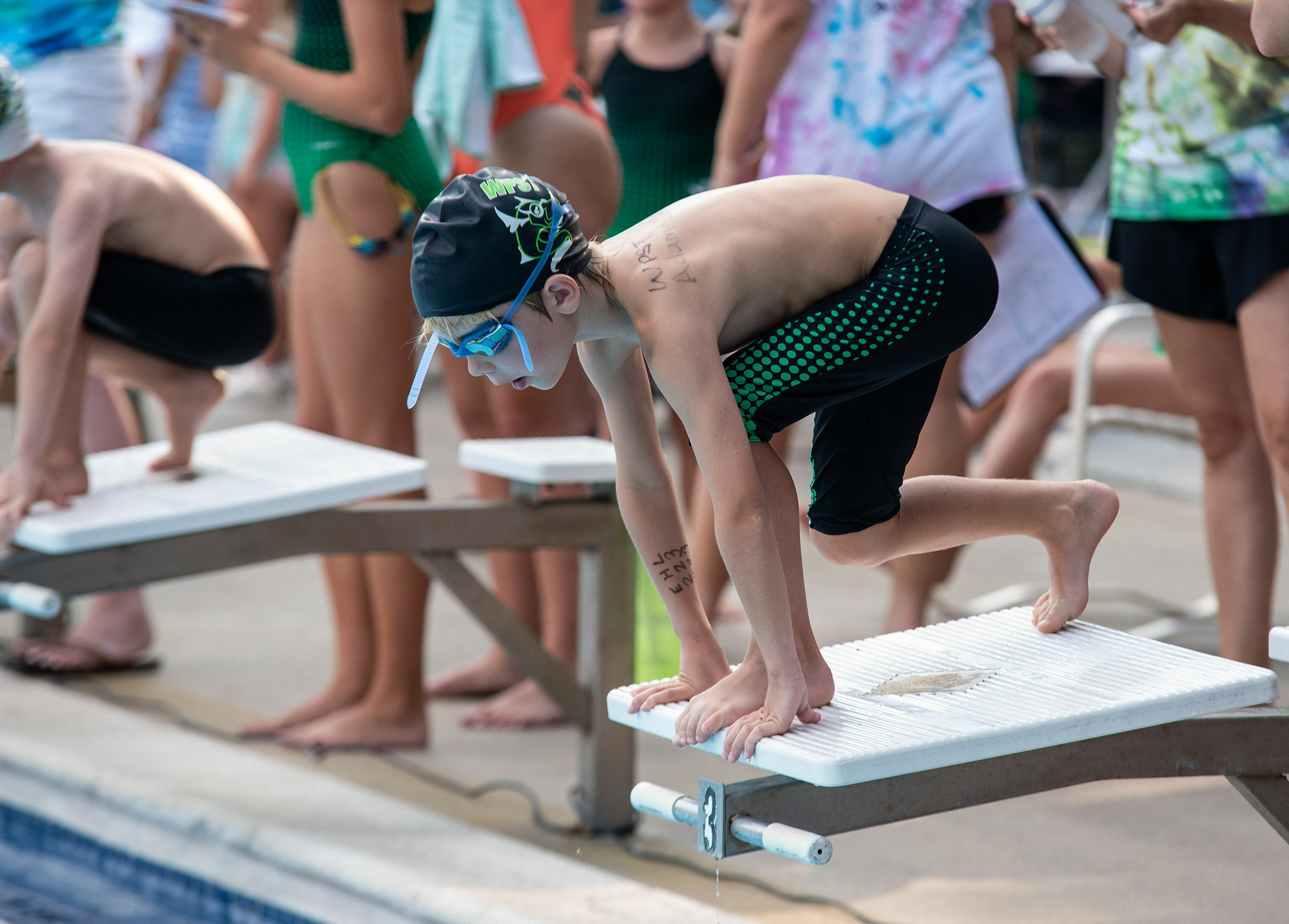
- Swimmers shall have the EHL table and their name (first initial and last name) written on their body in Sharpie prior to getting in the pool to warm-up.
- The coaches and bull pen volunteers will take charge of the swimmers for the remainder of the meet.
Volunteers:
- Volunteers shall check-in with the Volunteer Coordinator as soon as they arrive at the pool. Volunteers may need to be reassigned at the last minute based on needs.
- If you are a bull pen volunteer, you will need to start your job immediately and help wrangle the younger swimmers through warm-ups.
- If you are a timer or a judge, you will wait for the referee to call for the on-deck instructional meeting. Your job will start once the referee is ready to begin the meet.
The Most Important Reminder is...BE ON TIME!
A Guide to Swim Meets for New Swim Families
Recommended Items to Bring to Each Meet
- Goggles
- Barracudas Swim Cap
- Towels
- Folding chairs
- Card games, water tolerant board games, books and video games
- Permanent Marker
- Water or sports drink (no sodas) and fruit or healthy carb snacks
The Ultimate Rule
Please arrive on time for all meets – no later than 5:30. Warm-ups begin promptly at 5:30. The Coaches and Bullpen Parents will begin checking at 5:30 to see which swimmers are at the meet in order to get the relays on deck to begin the meet by 6:00 pm. If your swimmer arrives late, this causes much confusion and delay and could result from your swimmer being pulled out of events.
The Barracudas Bullpen
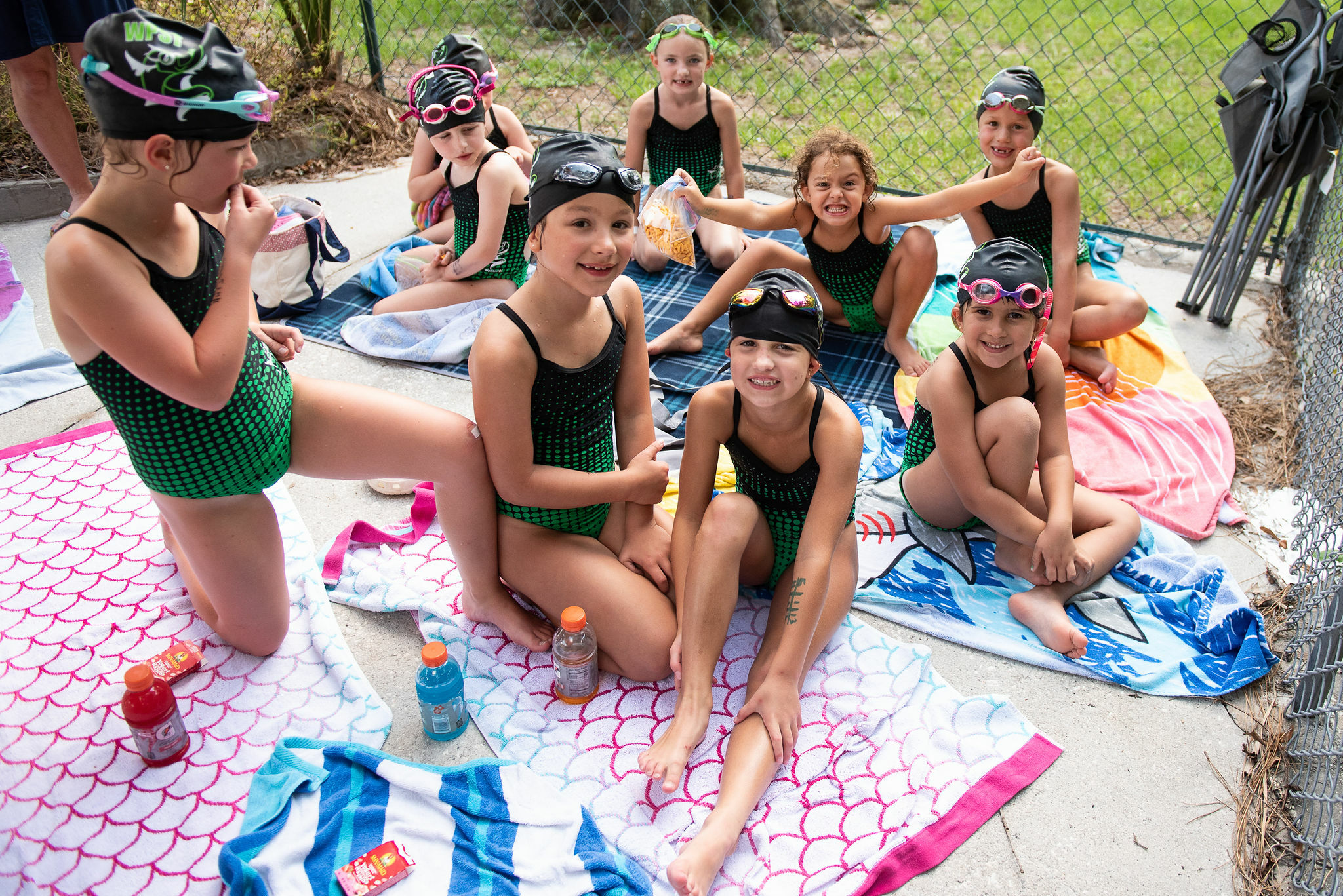
When you arrive at the meet, go directly to the designated Barracudas bullpen area. For swimmers age 10 and younger, find the designated Bullpen Parent for their age group. It is best for swimmers to sit with other swimmers in their age group. Swimmers are required to stay in the Bullpen area during the meet unless they are warming up, swimming their events, or taking a bathroom break.
If your swimmer is age 10 or younger, please help make sure your swimmer pays attention to his/her Bullpen Parent -- this volunteer is essential to the meet function and will help make sure your swimmer makes it to each of his/her events. Missed events are an unfortunate – but not uncommon – occurrence at swim meets. Please stress good behavior and listening skills to your younger swimmer. Card games, water-friendly board games, reading and video games are excellent pastimes for swimmers waiting for their upcoming events.
Heat Sheets
Heat Sheets will be available before the meet. Please print and bring with you to the meet. If you have trouble reading it, please ask an experienced parent to help you.
Understanding Swimming Events
Once you have access to a Heat Sheet, write your swimmer’s event name (stroke and distance), event number, heat number and lane number on your swimmer’s arm, foot, or hand. For example:
| Stroke | Event # | Heat | Lane |
| 100 FREE RELAY | 1 | 1 | 4 |
| 25 FREE | 13 | 3 | 3 |
| 25 BACK | 25 | 2 | 5 |
Please consult a Bullpen Parent if you need help. You need permanent marker so that it doesn’t wash off. This is really important for your swimmer and the Bullpen Parents. It is the only way for swimmers and Bullpen Parents to have a quick reference for the swimmer’s upcoming events. Also, please write your child's first initial and last name on their upper back/shoulder because it helps the Bullpen parents, timers, coaches, and officials identify if it is the correct swimmer in the correct lane.
There are anywhere from 1 to 5 heats (hopefully not more) in any given race. All swimmers for an event are swimming against each other, even if they are not in the same heat. The heats are generally set up with the slower swimming times in the beginning heats and the faster times in the ending heats. This certainly does not mean that a swimmer in the first heat could not win the race. If your swimmer does not have a recorded time, then she/he will generally be up in one of the beginning heats.
On the Pool Deck
Cheering is great, but wait until the swimmers have entered the water, and then you can yell all you want. We want everyone to know how much we support our Barracudas. It is a good idea to only go to the immediate pool area when it is your swimmer’s turn to swim. When your swimmer is “on deck” to swim, you can come up close to the deck to watch, but please respect the officials and timers, and leave them room to do their job.
Awards
The meet host will give out ribbons as awards. These are normally distributed sometime during the week following the meet. For individual events, 1st through 8th place will receive a ribbon. For relays, 1st and 2nd place will receive a ribbon.
Disqualification (“DQs”)
Even swimmers who have been swimming for years get disqualified (“DQ’d”) on occasion. Officials are generally very good at what they do, and we as parents need to respect their authority. If you have a dispute with a disqualification, the protocol is that you talk about it with the coach, not the official. The coach can then talk to the official and discuss the disqualification with your swimmer. In some cases, the official talks to the swimmer and explains what the error. If your child is disqualified in an event, be supportive rather than critical. For beginning swimmers, a disqualification should be treated as a learning experience, not as punishment. A DQ alerts the swimmer and the coach to what portions of the swimmer’s stroke need to be corrected. They should be considered in the same light as an incorrect answer in schoolwork. They point out areas which need further practice.
Volunteering
It takes a great deal of parent participation to effectively host a swim meet. There are a number of different jobs to be filled, from timing, bull pen parents, hospitality, set-up, clean up, etc. We need all of you to participate in running these meets. Without parental involvement it would not be possible to host home meets. There will be sign ups posted for each meet on the webpage.
- Officials - Officials are present at all competitions to implement the technical rules of swimming and to ensure that the competition is fair and equitable. In the Savannah Coastal Swim League, all officials (except timers) attend clinics in order to become certified by the league. All parents are encouraged to get involved with some form of officiating.
- Timers - Timers operate stopwatches record the swimmer's times on pre-printed timer sheets. This is an easy volunteer position and a great way for first time swim parents to get involved.
- Stroke & Turn Judges - Judges observe from each end of the pool and ensure that the rules relating to each stroke are being followed, and turns and finishes comply with the rules applicable to each stroke.
- Starter – The Starter assumes control of the the swimmers from the Referee, directs them to “take your mark” and sees that no swimmer is in motion prior to giving the start signal.
- Referee – The Referee has overall authority and control over the competition.
Year Round Swimming in Savannah
There are three USA Swimming-affiliated year-round swim teams in Savannah. Please feel free to ask the coach or teammates for more information about opportunities for year-round swimming in Savannah.
If your swimmer catches the fever and is interested in learning more about swimming, please visit usaswimming.org.
Ten Commandments for Parents with Athletic Children
From” The Young Athlete” by Bill Burgess
1. Make sure your child knows that, win or lose, scared or heroic, you love him/her, appreciate his/her efforts, and are not disappointed in him/her. This will allow him to do his best without fear of failure.
2. Try your best to be completely honest about your child's athletic ability, his competitive attitude, his/her sportsmanship and his/her actual skill level.
3. Be helpful but don’t coach you child on the way to the pool or on the way back, or at breakfast, and so on. It’s tough not to, but it’s a lot tougher for the child to be inundated with advice, pep talks, and often critical instruction.
4. Teach your child to enjoy the thrill of competition, to be "out there trying," to be working to improve his/her skills and attitude. Help your child to develop the feel for competing, for trying hard, for having fun.
5. Try not to re-live your athletic life through your child in a way that creates pressure; you fumbled, too, you lost as well as won. You were frightened, you backed off at times, and you were not always heroic. Don’t pressure him/her because of your lost pride.
6. Don’t compete with the coach. Remember that in many cases, a coach becomes a hero to the athlete, someone who can do no wrong.
7. Don’t compare the skill, courage, or attitudes of your child with other members of the team -- at least not within his/her hearing.
8. Get to know the coach so that you can he assured that his/her philosophy, attitudes, ethics and knowledge are such that you are happy to have your child under his/her leadership.
9. Always remember that children tend to exaggerate, both when praised and when criticized. Temper your reaction and investigate before overreacting.
10. Make a point of understanding courage, and the fact that it is relative. Some of us can climb mountains, and are afraid to fight. Some of us will fight, but turn to jelly if a bee approaches. Everyone is frightened in certain areas. Explain that courage is not the absence of fear, but a means of doing something in spite of fear or discomfort.
The job of a parent of an athletic child is a tough one, and it takes a lot of effort to do it well. It is worth all the effort when you hear your youngster say, "My parents really helped."